How To Give First Aid
Real Skills and Real Confidence When It Matters Most
Knowing how to give first aid could help you save the life of a family member, friend, colleague or even a complete stranger. Medical emergencies can happen anywhere, at any time, and often before professional help can arrive.
At First Aid and Safety Training, we believe first aid is more than a workplace requirement. It is a life skill that gives people the confidence to act when someone needs help most.
- Valuable Life Skills
- Increased Confidence
- Workplace Compliance
- Valuable Life Skills
- Increased Confidence
- Workplace Compliance
How To Give First Aid
Whether you are looking to improve your knowledge, support your family, or complete a recognised first aid qualification, understanding the basics of first aid is the first step.
Learn How To Give First Aid With Confidence
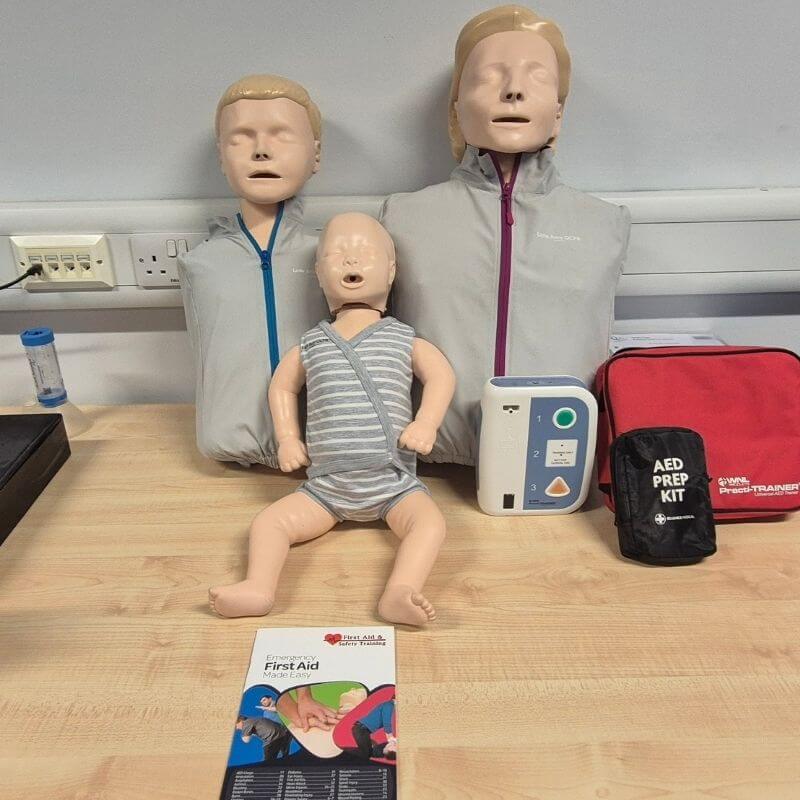
CPR and Defibrillator Training
Ofqual Regulated Qualifications
Training Delivered Across The North East
Need First Aid Training?
Call 0191 7166601 or contact us for our available first aid courses today.
Why Is First Aid Important?
Every year, thousands of people suffer accidents, illnesses and medical emergencies at home, at work and in public places.
The actions taken in the first few minutes can often make a significant difference to the outcome. Knowing how to give first aid at those times is vital for the casualty.
First aid aims to:
Preserve life
Prevent worsening
Promote recovery
Provide comfort and reassurance
Many people worry about getting things wrong. In reality, doing something appropriate is often far better than doing nothing at all (you are legally protected to act in an emergency).
The most important thing is recognising when somebody needs help and taking sensible action based on your training and ability.
The Basics of How To Give First Aid
When faced with an emergency, follow a structured approach.
D – Danger
Before helping anyone, check that the area is safe.
Look for hazards such as:
Moving traffic
Fire or smoke
Electricity
Chemicals
Falling objects
Aggressive behaviour
Never put yourself in danger while attempting to help another person.
R – Response
Check whether the casualty is responsive.
Speak clearly and ask:
“Can you hear me?”
If appropriate, gently shake their shoulders.
If they respond, determine what has happened and whether emergency medical assistance is required.
A – Airway
If the casualty is unresponsive, check that their airway is open and clear.
Look inside the mouth for obvious obstructions and carefully open the airway using recognised first aid techniques.
B – Breathing
Check whether the casualty is breathing normally.
Look for chest movement, listen for breathing sounds and feel for air movement.
If the casualty is unconscious but breathing normally, place them into the recovery position and continue monitoring them.
If they are not breathing normally, call 999 immediately and begin CPR.
C – Circulation And Catastrophic Bleeding
Look for signs of severe bleeding.
Life-threatening bleeding can become fatal within minutes.
Apply direct pressure to the wound and call 999 immediately if significant blood loss is present.
How To Give First Aid In A Medical Emergency
Cardiac Arrest
Cardiac arrest occurs when the heart suddenly stops pumping blood around the body.
Signs include:
Unresponsive casualty
Not breathing normally
No signs of life
If cardiac arrest is suspected:
Call 999 immediately
Begin CPR
Ask someone to bring a defibrillator (AED)
Continue CPR until help arrives
Early CPR and defibrillation significantly improve the chances of survival.
Choking
Choking happens when the airway becomes partially or completely blocked.
Common signs include:
Difficulty breathing
Inability to speak
Silent coughing
Blue or grey skin colouring
Prompt action is essential to remove the obstruction and restore normal breathing.
Severe Bleeding
Heavy bleeding can rapidly become life-threatening.
Apply firm direct pressure to the wound and seek emergency medical assistance if the bleeding cannot be controlled.
Training can help people recognise the difference between minor bleeding and catastrophic bleeding and teach appropriate treatment methods.
Burns And Scalds
Burns can occur from heat, electricity, chemicals, friction or radiation.
Immediate cooling with cool running water is recommended for most burns.
Professional medical advice should be sought for serious burns or burns affecting vulnerable areas of the body.
Seizures
Most seizures stop on their own within a few minutes.
Protect the casualty from injury, monitor their condition and seek emergency assistance if required.
Avoid restraining the casualty or placing anything into their mouth.
Anaphylaxis
Anaphylaxis is a severe allergic reaction that can become life-threatening.
Common triggers include:
Foods
Insect stings
Medications
Latex
If an adrenaline auto-injector is available and prescribed, it should be used promptly according to current guidance.
When Should You Call 999?
Always call 999 if:
Someone is unconscious
Someone is not breathing normally
Cardiac arrest is suspected
A person has severe bleeding
A serious injury has occurred
A stroke is suspected
A heart attack is suspected
A severe allergic reaction is occurring
You are unsure whether the situation is life-threatening
Emergency call handlers can provide instructions while help is on the way.
Trusted First Aid Information
First aid guidance (how to give first aid) can change as new evidence becomes available, although the basic principles always remain, do not hesitate to act because you are not qualified or out of date.
For the latest information, we recommend consulting recognised organisations including:
Resuscitation Council UK
Qualsafe Awards
Health and Safety Executive (HSE)
Early Years Foundation Stage (EYFS)
NHS Health Information
These organisations regularly review and update their guidance based on current evidence and best practice.
Why It’s Safe To Help Someone In an Emergency
One of the biggest concerns for people who witness an emergency is the fear of doing something wrong and potentially being held legally responsible. It’s completely natural to feel this way, but in the UK, the legal system is structured to support people who act in good faith to help others in need rather than to punish them.
There isn’t a specific “Good Samaritan Law” in the UK like you might see in other countries, but there is important legal protection that applies when you assist a person in an emergency. The Social Action, Responsibility and Heroism Act 2015 (SARAH Act) requires courts in England and Wales to take into account the circumstances under which a person acted when considering any claim of negligence or breach of duty.
That means if you stepped forward to help someone in distress, acted responsibly and within the limits of your training, the law recognises that you were acting for the benefit of others and doing your best in a difficult situation.
Acting to help another person doesn’t come with a legal duty of care unless you are in a role where that duty already exists (for example, as an employed first aider at work or a healthcare professional at work). For most bystanders and trained first aiders, the legal test under UK law is whether what was done was reasonable, in good faith and within the scope of your knowledge and training.
As a result, it’s extremely unlikely that you would face legal consequence for giving first aid, especially when you’ve acted with the right intention and followed recognised best practices.
Ofqual‑regulated training such as Emergency First Aid at Work, First Aid at Work and Paediatric First Aid also strengthens your position because it helps ensure you are confident, competent and acting within your skill set which is exactly what the law looks at first if your actions are ever questioned.
Learn How To Give First Aid Properly
Reading first aid information online is a great starting point, but practical training is what builds real confidence.
You will learn how to give first aid properly and be confident that your actions are correct. Our courses combine hands-on practice, realistic scenarios and expert instruction to help learners feel prepared to act in a genuine emergency.
Courses include:
Emergency First Aid at Work
First Aid at Work
Paediatric First Aid
Emergency Paediatric First Aid
Annual Refresher Training
Blended First Aid Training
All regulated qualifications are delivered through our Qualsafe Registered Training Centre and meet current workplace requirements. However, you do not need to have a first aid qualification to learn how to give first aid in an emergency.
Ready To Learn First Aid or Improve Your First Aid Skills
Whether you need on-site training for your team, want help choosing the right course or want to learn how to give first aid for your own confidence or reasons, we are here to help.
Call Helen on 0191 7166601
Text us on 07853657747
Email admin@firstaidsafetytraining.com
How To Give First Aid FAQ's
First aid is the immediate care given to someone who is injured or suddenly becomes ill, before professional medical help arrives. Its purpose is to preserve life, prevent the condition from worsening, and promote recovery.
First aid can save lives. Quick and correct action during an emergency, such as a cardiac arrest, severe bleeding, or choking incident, can make a significant difference to outcomes.
Always follow the DRABC approach:
Danger: Ensure the area is safe.
Response: Check if the person is conscious.
Airway: Make sure it is clear.
Breathing: Check and support breathing.
Circulation: Control severe bleeding and maintain circulation.
If someone is unresponsive and not breathing normally, call 999 immediately and start CPR: 30 chest compressions followed by 2 rescue breaths. Use an AED if one is available. Detailed practical training is included in our Emergency First Aid at Work and First Aid at Work courses.
Encourage coughing if they are able. If the airway is blocked and they cannot breathe, speak, or cough, deliver back blows and chest thrusts as taught in our regulated training courses. Always call 999 if the person remains at risk.
Apply firm direct pressure to the wound using a clean dressing or cloth. Call 999 immediately for major bleeding and continue to monitor the casualty until help arrives. Practical management of severe bleeding is covered on our First Aid at Work and Paediatric First Aid courses.
Yes, first aid can be learned by anyone. Our courses are suitable for individuals, parents, carers, businesses, and community groups. We also provide guidance for learners with different abilities to ensure inclusive training.
All regulated first aid courses are available through our First Aid and Safety Training Qualsafe Registered Training Centre. Options include Emergency First Aid at Work, First Aid at Work, and Paediatric First Aid.
No, you can provide basic first aid in an emergency without a certificate. However, completing a regulated course ensures you know the latest best practices and builds confidence to respond effectively.
Absolutely. Most emergencies happen at home, in public spaces, or during activities. First aid knowledge can help you support family, friends, or strangers until professional help arrives.
Yes, regular refreshers are recommended to maintain skills. We offer annual first aid refresher courses and annual paediatric first aid courses to ensure your knowledge remains current.
Everyone can benefit, but particularly:
Workplace staff
Parents and carers
Community volunteers
Teachers and nursery staff
Individuals who want to be prepared in an emergency
Yes, in the UK you are generally protected when helping someone in an emergency, even if you are not professionally trained. The Social Action, Responsibility and Heroism Act 2015, often referred to in practical terms as the Good Samaritan framework, requires courts to consider your intentions and the circumstances in which you acted when reviewing any claim of negligence. If you act in good faith, responsibly and within your training, the legal system supports you rather than penalises you. It’s also worth noting that there has never been a successful legal case in the UK against someone who provided first aid in good faith.