When you work with children, first aid is not just a qualification – it is a responsibility. Whether you are part of an early years setting, school, childminding environment, wraparound care, or any role where children are in your care, the ability to recognise illness, act quickly, and respond calmly can make a life-changing difference.
At First Aid and Safety Training, our Blended Paediatric First Aid courses are designed to give learners both strong theoretical knowledge and real-world practical confidence. The course is fully EYFS and HSE compliant, ensuring it meets legal and regulatory requirements while remaining practical, engaging, and relevant to everyday childcare environments.
Why Paediatric First Aid Is So Important
Children are not small adults. Their bodies respond differently to illness and injury, and emergencies can escalate very quickly. In many real-life incidents involving children, outcomes are determined not by equipment or environment, but by how quickly a responsible adult recognises a problem and takes action.
We regularly hear examples from learners who have:
- Had to manage a child with breathing difficulties while waiting for emergency services
- Dealt with severe allergic reactions during meal or snack times
- Supported children following head injuries, falls, or seizures
- Faced the fear of not knowing what to do in a critical moment
Paediatric first aid training provides the knowledge and confidence to step in, stay calm, and act, rather than freeze through fear of doing the wrong thing.
The Blended Learning Approach
Our blended paediatric first aid course is split into two clear parts:
- Online learning – covering essential knowledge and theory
- Day 2 practical training – focused on hands-on skills and assessment
This approach allows learners to absorb information at their own pace before attending a practical day that focuses on doing, not just listening.
Online Learning: Building Knowledge and Understanding
The online element provides a thorough foundation in paediatric first aid principles and conditions learners are most likely to encounter when caring for children.
Key areas covered include:
Roles, Responsibilities and Safety
- The role and responsibilities of a paediatric first aider
- Definitions of an infant and a child
- Infection control, personal protective equipment, and preventing cross-contamination
- Accident and incident reporting requirements
Assessing an Emergency
- Scene surveys and casualty assessment
- Primary survey and knowing when and how to call for help
- Understanding hypoxia, circulation issues, and shock
Childhood Illnesses and Medical Conditions
- Diabetes
- Asthma and respiratory conditions
- Meningitis and sepsis
- Seizures and febrile convulsions
- Allergic reactions and anaphylaxis
- Poisoning
These topics are particularly important as symptoms in children can be subtle at first, and early recognition can prevent deterioration.
Injuries Common in Childcare Settings
- Burns and scalds (including electrical and chemical burns)
- Electric shock
- Fractures, dislocations, sprains, and strains
- Head, neck, and spinal injuries
- Foreign bodies in the eyes, ears, and nose
- Eye injuries
- Extremes of heat and cold
- Minor injuries such as bites, stings, cuts, grazes, bumps, bruises, splinters, and nosebleeds
Learners often comment that this section helps them understand why certain injuries must never be ignored, even when a child appears settled initially.
Day 2 Practical Training: Turning Knowledge into Action
The second day focuses on practical application, confirming understanding from the online learning and developing hands-on competence.
Practical skills include:
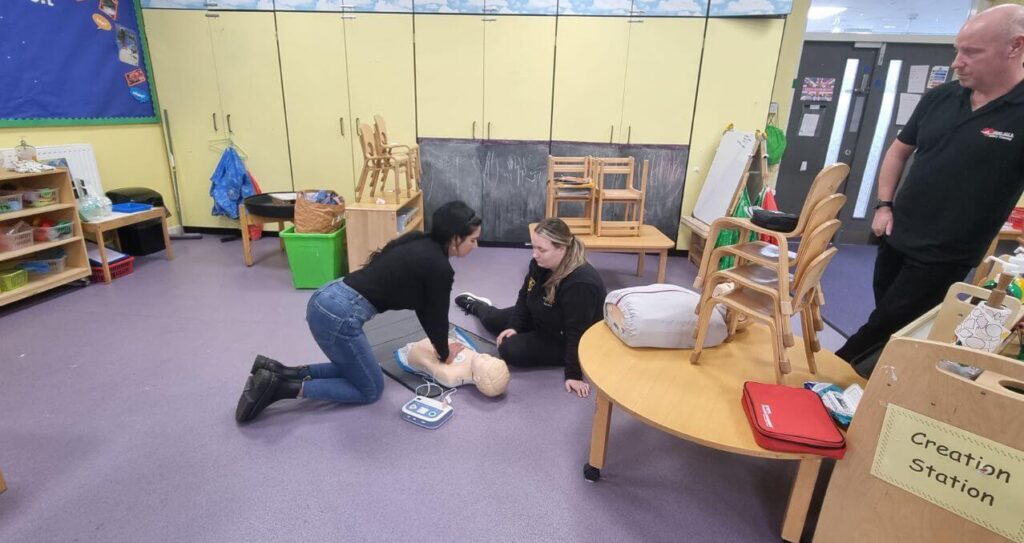
- Infant and child CPR and safe use of an Automated External Defibrillator (AED)
- Managing the unconscious infant or child (breathing and not breathing normally)
- Choking emergencies
- Management of seizures
- External bleeding and shock
- Management of life-threatening and catastrophic bleeding
- Asthma emergencies
- Fractures, dislocations, sprains, and strains
- Head, neck, and spinal injuries
Learners practise these skills repeatedly in a supportive environment, helping to remove anxiety and build confidence. This is especially important for those who worry about “getting it wrong” under pressure.
Assessment and Compliance
To complete the qualification, learners undertake:
- Two multiple choice question paper theory assessments
- Ongoing practical assessment throughout the day
The course meets EYFS requirements and follows HSE guidance, making it suitable for nurseries, preschools, childminders, schools, and any role where adults are responsible for children.
More Than a Qualification
Paediatric first aid training is not just about passing an assessment. It is about:
- Feeling confident to act in an emergency
- Protecting children in your care
- Reassuring parents and guardians
- Meeting legal and professional responsibilities
Many learners leave the course saying they feel more aware, more confident, and more prepared, not just at work but in everyday life with their own families.
Choosing the Right Paediatric First Aid Training
If you work with children, paediatric first aid is essential. The blended approach ensures learners gain deep understanding, practical confidence, and a qualification that meets regulatory standards without feeling rushed or overwhelming.
We are also developing a practical guide titled:
“What First Aid Training Do I Need For My Business?”
This will help childcare providers and employers understand training requirements, compliance, and the right course options for their setting.
Book Paediatric First Aid Training
We deliver blended paediatric first aid courses, including on-site training and open courses across the North East with First Aid and Safety Training.
Contact us to discuss your setting, staff numbers, and the right training solution for your team.