Skip to content

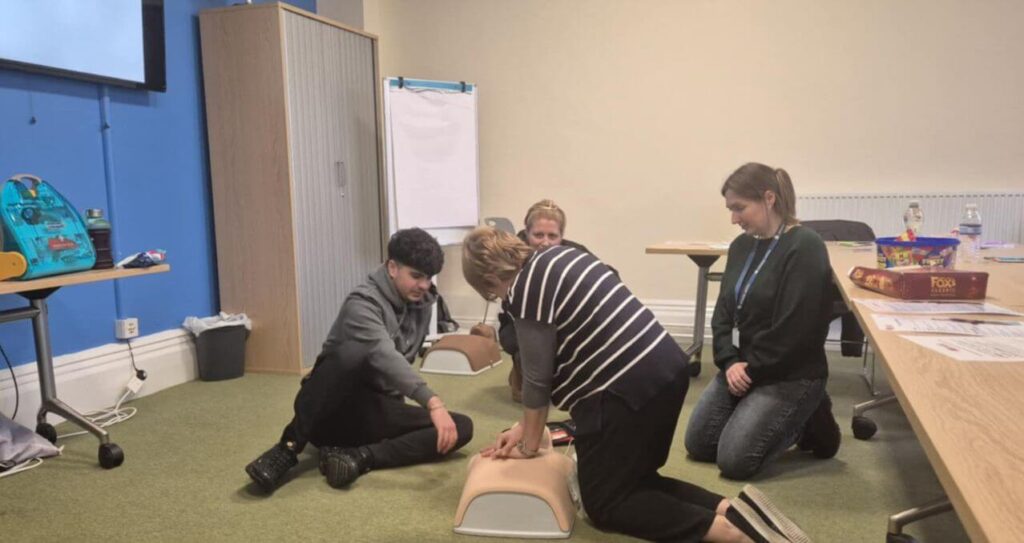
Developing first aid confidence takes more than listening to a presentation. Learners need opportunities to practise, ask questions, make mistakes and repeat techniques until they become comfortable performing them.
That was a major theme during an Emergency First Aid at Work (EFAW) course delivered by First Aid and Safety Training at Bede Tower in Sunderland in December.
The course brought together learners from different working backgrounds, including a personal trainer, team members from Citizens Advice Sunderland, and a head of year and teachers from Boldon School.
Some were learning first aid skills for the first time, while others brought previous knowledge and experience into the training room.
Building First Aid Confidence Through Practice
People can arrive at a first aid course with very different levels of confidence.
Some learners are comfortable getting involved immediately. Others may be worried about performing CPR incorrectly, completing an assessment or being expected to remember too much information.
Our approach is to introduce a skill clearly, demonstrate it and then give learners time to practise.
That means someone doesn’t simply watch CPR being performed. They physically practise chest compressions and rescue breaths.
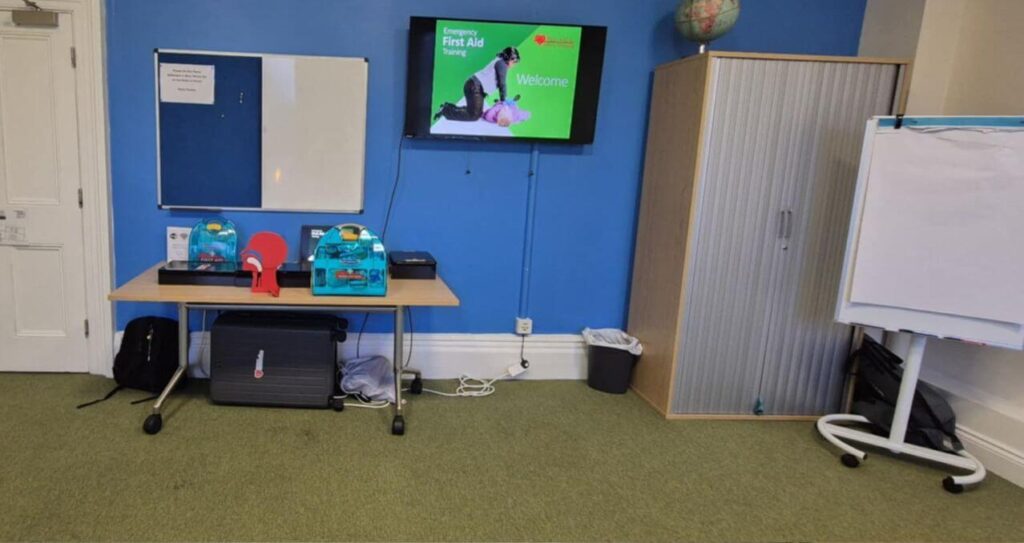
They don’t just hear how an Automated External Defibrillator works. They use an AED trainer as part of a cardiac arrest scenario.
Repeated practice also gives us opportunities to provide feedback and correct techniques before assessment.
The aim is to develop both competence and first aid confidence.
A Mixed Group of Learners
The course included people working within education, fitness and community-facing organisations.
That mixture created useful discussion throughout the day.
Teachers could consider how first aid might be needed within their working environment, while a personal trainer naturally had different experiences and concerns. Staff from Citizens Advice also brought the perspective of working with members of the public.
Although their workplaces were different, the fundamental emergency first aid skills remained the same.
Bringing those perspectives together helped make the discussions more interesting without changing the requirements of the qualification.
What Did Learners Practise?
The Emergency First Aid at Work qualification develops the essential skills required to respond to a range of workplace emergencies.
During the course, learners covered and practised areas including:
- the role and responsibilities of an emergency first aider
- assessing an incident safely
- recognising an unresponsive casualty
- adult CPR
- using an Automated External Defibrillator (AED)
- managing an unconscious casualty
- responding to choking
- controlling external bleeding
- recognising and managing shock
You can find more information about the Emergency First Aid at Work qualification and its practical requirements.
Creating an Environment Where People Can Ask Questions
Confidence also comes from feeling comfortable enough to ask questions.
This particular group quickly developed a friendly and interactive atmosphere.
Learners discussed situations relevant to their own work, asked questions and shared their experiences with the rest of the group.
That doesn’t mean treating first aid casually. The subjects being discussed can have very serious consequences.
It means creating a training environment where somebody can say, “I’m not sure about that,” and practise again rather than remaining quiet because they’re worried about getting something wrong.
That is particularly useful for first-time learners.
Practice Before Assessment
Practical assessment is an important part of the qualification, but learners shouldn’t reach assessment having only performed a technique once.
Skills were demonstrated and practised throughout the day, giving learners repeated opportunities to improve their technique and receive feedback.
By the time assessment took place, the actions being assessed were already familiar.
This approach can help reduce unnecessary anxiety around assessment while still requiring learners to demonstrate the appropriate practical skills.
What Did the Learners Think?
The feedback from this course is particularly useful because several learners specifically mentioned practical training and increased confidence.
“Hands on tasks and training, very informative and thorough course.” – Cem
“Adam was an excellent trainer and very knowledgeable. I have really enjoyed the training.” – Sarah
“Training was great. I feel very confident in my first aid knowledge after today.” – Ashleigh
“Great delivery of course, all aspects covered.” – Theresa
“Really enjoyed the course, very interesting and now have more confidence.” – Gillian
“Really enjoyed the course, a good mix of theory and practical exercises.” – Denise
“Really good course, very nice trainers and really enjoyed.” – Marie
All learners successfully completed the qualification. Read more reviews from Sunderland.
For us, however, the comments about confidence were just as important.
A certificate confirms that someone has successfully completed the qualification. If an emergency happens later, they also need enough confidence to step forward and use what they have learned.
From Training Room to Real Emergency
Nobody can completely recreate the pressure of a genuine emergency within a first aid classroom.
Practical training can, however, make the actions more familiar.
A learner who has physically performed CPR, attached AED pads, managed a simulated choking casualty and practised first aid techniques has something to draw upon if they later face an emergency.
That’s why practical participation remains such an important part of developing first aid confidence.
First Aid Training in Sunderland
This course was delivered at Bede Tower and provides another example of First Aid and Safety Training’s experience delivering workplace first aid training for organisations and individuals across Sunderland.
For businesses and organisations that need several members of staff trained together, we provide onsite first aid training in Sunderland.
If you’re looking for an individual place on a course, you can also check our current first aid course locations and availability.
For advice about the appropriate qualification or training arrangement for your organisation, contact First Aid and Safety Training.