Level 3 Allergy and Anaphylaxis Awareness Training
Qualsafe Level 3 Award in Allergy and Anaphylaxis Awareness (RQF)
Allergy and Anaphylaxis Awareness Training gives your staff the knowledge and confidence to understand allergies, recognise an emergency and know how to respond. This Level 3 qualification goes beyond basic first aid, helping schools, nurseries and organisations build greater allergy awareness and preparedness.
- Regulated Level 3 Qualification
- Practical Training
- Onsite Training
- Regulated Level 3 Qualification
- Practical Training
- Onsite Training
Allergy and Anaphylaxis Awareness Training
Allergy and Anaphylaxis Awareness Training provides a much wider understanding of allergy safety than simply knowing how to respond to an anaphylactic emergency.
This regulated Level 3 qualification helps learners understand allergies, recognise allergic reactions and anaphylaxis, understand emergency medication, support effective allergy management and know how to respond confidently when something goes wrong.
It is particularly relevant for schools, nurseries, early years settings and organisations responsible for children, where allergy safety depends on awareness and preparation across the organisation, not just the knowledge of a designated first aider.
- Understand Allergies and Common Allergens Build a clearer understanding of allergies, triggers and how allergic reactions can affect people.
- Recognise Allergic Reactions and Anaphylaxis Know the signs to look for and understand when an allergic reaction becomes a life threatening emergency.
- Understand Allergy Plans and Preparedness Explore the importance of allergy management, individual plans, policies and effective preparation.
- Respond to Allergy and Asthma Emergencies Develop the knowledge and confidence to respond appropriately, including understanding emergency medication.
- Support People Living With Allergies Understand the wider impact of allergies, including wellbeing, inclusion, anxiety and the importance of creating a supportive environment.

Allergy Safety Is About More Than First Aid
When someone experiences anaphylaxis, recognising the emergency and responding quickly can save their life. But effective allergy safety starts long before an emergency happens.
Staff need to understand what allergies are, how exposure can happen, what signs and symptoms to look for, where emergency medication is kept and what action to take. Organisations caring for children also need people who understand the importance of individual healthcare arrangements, allergy action plans, communication, inclusion and learning from incidents and near misses.
The Level 3 Award in Allergy and Anaphylaxis Awareness brings these areas together.
Learners develop their understanding of common allergens and allergic reactions, allergy management and planning, anaphylaxis, asthma, emergency medication, supporting people living with allergies and responding appropriately when an emergency occurs.
This makes the qualification particularly valuable in environments where responsibility for a child does not sit with one person throughout the day.
A child might move between their classroom teacher, teaching assistants, lunchtime supervisors, sports staff, wraparound care, school trips and other activities. Allergy awareness therefore needs to extend beyond the trained first aider.
Already Have Paediatric First Aid Training? This Course Is Different.
This is a point we want to make very clear.
Paediatric First Aid, Emergency First Aid at Work, First Aid at Work, CPR training and anaphylaxis training all have important purposes.
Depending on the qualification, learners may be taught how to recognise and respond to anaphylaxis as part of their emergency first aid training.
The Level 3 Award in Allergy and Anaphylaxis Awareness has a different purpose.
It is not a replacement for Paediatric First Aid or your organisation’s required first aid provision. Equally, having qualified first aiders does not mean that your wider staff have received dedicated allergy awareness training.
This qualification looks beyond the immediate emergency and develops a broader understanding of allergy safety.
| Training | Main Focus |
|---|---|
| Paediatric First Aid | First aid emergencies involving babies and children |
| EFAW and FAW | Emergency and workplace first aid |
| CPR and Defibrillator Training | Cardiac arrest, CPR and use of an AED |
| Anaphylaxis Training | Recognising and responding to an anaphylactic emergency |
| Level 3 Allergy and Anaphylaxis Awareness | Wider allergy awareness, management, preparation, recognition, support and emergency response |
The Level 3 qualification includes areas such as allergy management, allergens, policies and individual plans, emergency medication, anaphylaxis, asthma, wellbeing, inclusion, incidents and near misses.
These qualifications complement each other. They do not replace each other.
For a school or early years setting, the aim is not simply to have someone who knows what to do once an emergency has happened. It is to create greater awareness among the people who may be responsible for that child throughout their day.
Not sure how this fits with your existing first aid training?
Read our guides to Benedict’s Law and Allergy and Anaphylaxis Training and First Aid Compliance to understand how allergy awareness training can sit alongside your existing first aid provision.
Who Is Allergy and Anaphylaxis Awareness Training For?
The Level 3 Award in Allergy and Anaphylaxis Awareness is designed for people who may need to understand, manage or respond to allergies as part of their role.
It is particularly valuable in schools, nurseries, early years settings and other environments where staff share responsibility for the safety and wellbeing of children. Allergy awareness should not be limited to designated first aiders. A child may be supervised by many different people throughout their day, and an allergic reaction can happen wherever they happen to be.
This training can therefore be suitable for:
Teachers and Teaching Assistants who have day to day responsibility for children in the classroom.
Nursery and Early Years Practitioners caring for babies and young children who may have known allergies or experience their first allergic reaction while in their care.
Lunchtime and Catering Staff who work in environments where food, allergens and cross contamination are particularly important considerations.
Sports, PE and Activity Staff responsible for children during physical activity, clubs and events.
Wraparound and Holiday Club Staff supervising children outside normal classroom hours.
Pastoral, SEND and Support Staff who may have an important role in supporting individual children and their healthcare needs.
Reception, Administration and Support Teams who may be involved in communication, medication arrangements or responding when an emergency occurs.
School and Nursery Leaders responsible for developing effective arrangements, staff awareness and a safer environment.
Anyone Working With or Responsible for Children who would benefit from a better understanding of allergies, anaphylaxis and emergency response.
Allergy Awareness Should Extend Beyond the First Aider
Having appropriately qualified first aiders remains essential, but an allergic reaction will not necessarily happen while a first aider is standing beside the child.
It could happen in the classroom, dining hall, playground, during PE, at an after school club or while away on a school trip.
Wider staff awareness can help people recognise that something is wrong, understand the importance of acting quickly, know where help and emergency medication can be accessed and support the organisation’s established allergy procedures.
The aim is not to turn every member of staff into a first aider. It is to help create an environment where more people understand allergies and know how to respond appropriately when it matters.
Training a whole team?
FAST can deliver Allergy and Anaphylaxis Awareness Training onsite for schools, nurseries and organisations.
Contact us on 0191 7166601, email us at admin@firstaidsafetytraining.com or send us a message online to discuss your staff numbers and training requirements.
What Will You Learn on the Level 3 Allergy and Anaphylaxis Awareness Course?
The Level 3 Allergy and Anaphylaxis Awareness Training course develops a broader understanding of allergy safety, from recognising common allergens and managing risks through to responding to an anaphylactic emergency.
The training looks at what can be done before, during and after an allergic reaction, helping learners understand both emergency response and the wider responsibilities involved in supporting people with allergies.
Understanding Allergies and Allergens
Learn what an allergy is, how the immune system responds to an allergen and the different ways an allergic reaction can affect someone. The course also explores common allergy related conditions, food allergies and the major food allergens people may encounter.
Recognising Allergic Reactions
Understand the different signs and symptoms that can occur during an allergic reaction and why reactions can vary from person to person. Learners develop their awareness of when symptoms may indicate a more serious emergency.
Recognising and Responding to Anaphylaxis
Learn how to recognise the potentially life threatening signs of anaphylaxis, including problems affecting the airway, breathing and circulation, and understand the actions that should be taken when anaphylaxis is suspected.
Emergency Allergy Medication
Develop an understanding of emergency medication used for severe allergic reactions, including adrenaline devices, how they form part of an individual’s emergency arrangements and the importance of quick access when they are needed.
Asthma and Allergy Emergencies
Explore asthma, how to recognise an asthma attack and the actions that may be required. Learners also consider the relationship between asthma and allergy emergencies and why it is important to understand both.
Allergy Management, Policies and Individual Plans
Understand the importance of effective allergy management, including Individual Healthcare Plans, Allergy Action Plans, medication arrangements and clear procedures that help staff understand what should happen before an emergency occurs.
Wellbeing, Inclusion and Allergy Awareness
Allergies can affect much more than someone’s physical health. The course considers the impact allergies can have on wellbeing, participation and everyday life, helping learners understand the importance of creating a supportive and inclusive environment.
Incidents and Near Misses
Understand why allergic incidents and near misses should be taken seriously. Learners explore the importance of recording and reviewing what happened so that organisations can identify potential weaknesses and improve their arrangements for the future.
Practical Knowledge You Can Use
The aim is not simply to remember information for an assessment.
Learners should leave with a clearer understanding of how allergies affect people, how good preparation can reduce risk, what warning signs to look for and what action to take when someone needs help.
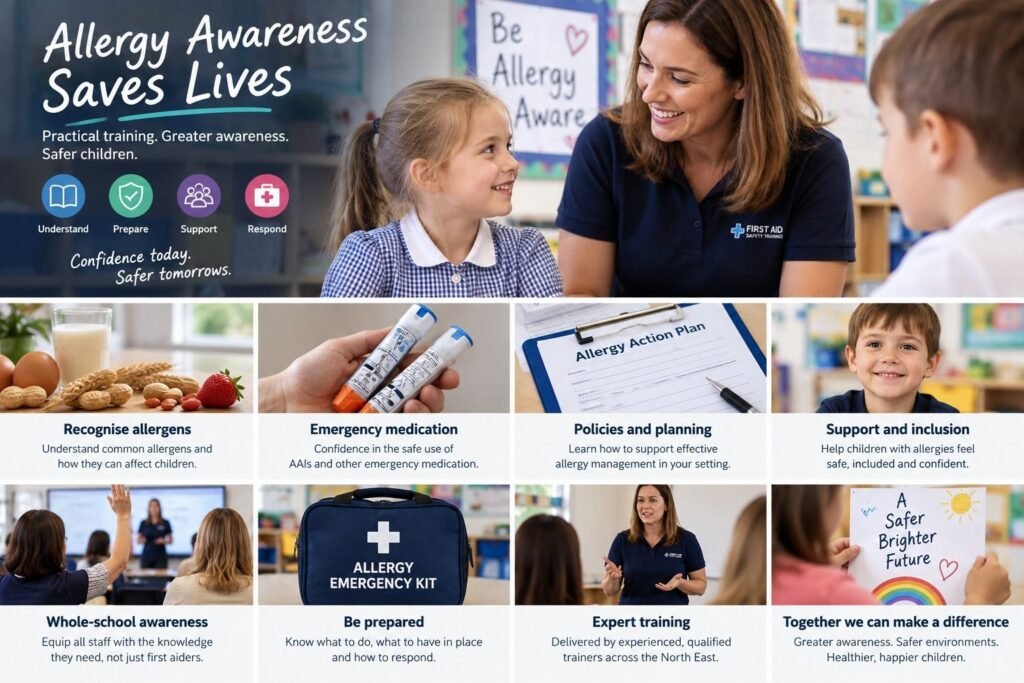
Recognising and Responding to Anaphylaxis
Anaphylaxis is a serious and potentially life threatening allergic reaction that can develop rapidly. Knowing what to look for and understanding when an allergic reaction has become an emergency is an important part of Allergy and Anaphylaxis Awareness Training.
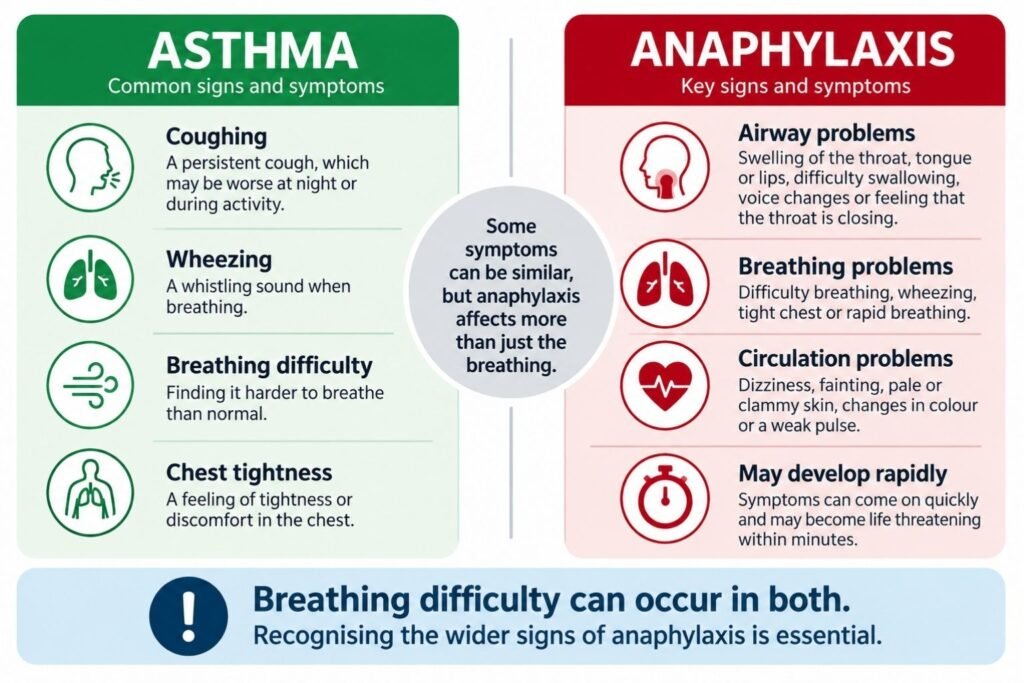
During the course, learners develop their understanding of the warning signs associated with anaphylaxis, particularly problems affecting a person’s Airway, Breathing or Circulation.
Airway
Swelling of the throat, tongue or lips, difficulty swallowing, voice changes or feeling that the throat is closing.
Breathing
Difficulty breathing, wheezing, chest tightness or other signs that normal breathing is becoming affected.
Circulation
Dizziness, fainting, pale or clammy skin, changes in colour or other signs that circulation may be affected.
Anaphylaxis does not always look the way people expect. A skin rash, flushing or swelling may occur, but these signs are not always present. This is why recognising potentially life threatening changes to the airway, breathing or circulation is so important.
Knowing When and How to Act
Recognising anaphylaxis is only the first part of an effective response.
Learners explore the immediate actions required when anaphylaxis is suspected, including accessing emergency medication, helping the casualty to use their prescribed adrenaline device where appropriate, contacting the emergency services and continuing to monitor and support them while help is on the way.
The course also considers what should happen if symptoms do not improve or return, why the casualty’s position matters and the actions required if they become unresponsive.
Most importantly, learners develop a better understanding of why anaphylaxis requires immediate action and why staff should not delay when the signs of a serious allergic emergency are present.
This Is Only One Part of Allergy Safety
Emergency response is essential, but this qualification does not begin and end with learning how to use an adrenaline device.
Effective allergy safety also means understanding the individual, their allergy arrangements, where medication is located, how it can be accessed and what procedures are already in place before an emergency happens.
That is why the Level 3 qualification combines emergency response with wider allergy awareness, preparation and management.
Looking specifically for emergency anaphylaxis training?
Our dedicated Anaphylaxis Training North East page explains the other anaphylaxis training options available through First Aid and Safety Training.
Emergency Medication and Adrenaline Devices
When anaphylaxis is suspected, quick access to the correct emergency medication can be critical. The Level 3 Allergy and Anaphylaxis Awareness Training course helps learners understand the role of emergency allergy medication and why organisations need clear arrangements for how it is stored, accessed and used.
Learners explore adrenaline devices and the importance of following the individual’s Allergy Action Plan or other agreed emergency arrangements. The training also considers what staff need to understand about accessing medication quickly and supporting someone during an allergic emergency.
Understanding Adrenaline Devices
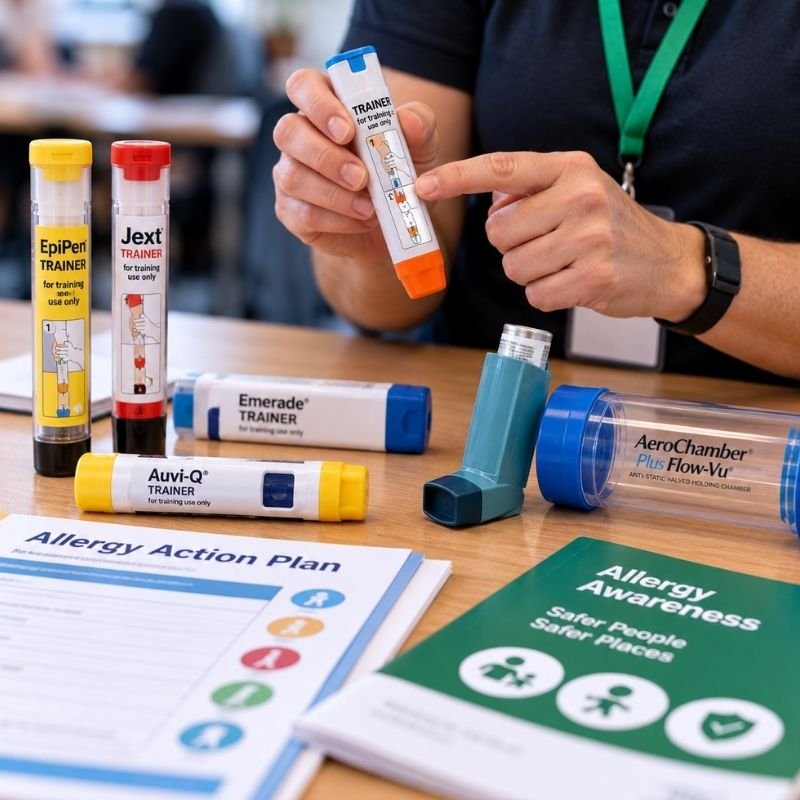
Different people may be prescribed different adrenaline devices. Staff therefore need more than an awareness of a single brand or product.
During the course, learners develop their understanding of the emergency medication they may encounter and the importance of following the instructions for the individual and the device available.
This helps move the focus away from simply asking “Do you know how to use an EpiPen?” towards a much more useful question:
“Would you know what to do if someone in your care was experiencing anaphylaxis?”
Medication Needs to Be Accessible
Having emergency medication available is only useful if the people responsible for the individual know that it exists, understand where it is kept and can access it quickly when required.
This is why emergency medication should form part of wider allergy preparation rather than being considered in isolation.
The qualification helps learners understand the relationship between the individual, their emergency medication, their allergy arrangements and the people responsible for supporting them.
Schools and Emergency Medication
There are specific arrangements and guidance relating to emergency allergy medication within schools. Rather than duplicating those requirements here, we can link directly to your dedicated guidance:
For more information about allergy safety requirements in schools, read our guide to Benedict’s Law and Allergy and Anaphylaxis Training.
Allergy Planning and Preparedness
Good allergy safety starts before an allergic reaction happens.
Knowing how to recognise anaphylaxis and respond in an emergency is essential, but organisations also need effective arrangements that help staff understand an individual’s allergies, the support they may need and what should happen if something goes wrong.
The Level 3 Allergy and Anaphylaxis Awareness Training course helps learners understand the importance of planning, communication and preparation as part of a wider approach to allergy safety.
Individual Healthcare Plans
An Individual Healthcare Plan can help bring together important information about a person’s medical needs and the support required within a school or other setting.
Learners explore the role of individual planning and why the people responsible for supporting someone with an allergy need to understand the arrangements that apply to them.
Allergy Action Plans
An Allergy Action Plan provides important information about an individual’s allergies and what action should be taken if they experience an allergic reaction.
The course helps learners understand why these plans matter and the importance of staff knowing where relevant information can be found when it is needed.
Allergy Safety Policies
Individual plans are important, but organisations also need clear arrangements for managing allergies more widely.
Learners consider the role of allergy policies and procedures in creating a consistent approach, including how responsibilities, communication and emergency arrangements can be understood across an organisation.
Communication Across the Organisation
Allergy safety should not depend on one person holding all the information.
In a school, for example, a child may move between teachers, teaching assistants, lunchtime staff, PE lessons, clubs, wraparound care and school trips.
Effective communication helps ensure that the people responsible for them understand the arrangements that are relevant to their role.
From Emergency Response to Everyday Readiness
This is one of the important differences between dedicated Allergy and Anaphylaxis Awareness Training and a conventional first aid course.
First aid training prepares people to respond when someone becomes ill or injured. This qualification also encourages learners to think about the arrangements that should already be in place before the emergency occurs.
That means asking practical questions such as:
Do the right people know about the individual’s allergy?
Are their plans and emergency arrangements understood?
Do staff know where emergency medication is located?
Can it be accessed quickly?
Do people understand their responsibilities?
What happens when the normal routine changes, such as during trips, activities or events?
Good preparation cannot guarantee that an allergic reaction will never happen. It can help create an environment where people are better prepared to recognise a problem and respond appropriately if it does.
Asthma and Allergies
Asthma and allergies can be closely connected, which is why Allergy and Anaphylaxis Awareness Training also develops learners’ understanding of asthma and asthma emergencies.
For schools, nurseries and organisations responsible for children, this is particularly important because staff may need to recognise whether someone is experiencing an asthma attack, an allergic reaction or a more serious anaphylactic emergency.
Recognising an Asthma Attack
Learners explore the signs and symptoms that may indicate an asthma attack, including coughing, wheezing, difficulty breathing, chest tightness and difficulty speaking normally.
The course also looks at how symptoms can become more serious and why changes in someone’s breathing should never be ignored.
Responding to an Asthma Emergency
Learners develop their understanding of the actions that may be required when someone experiences an asthma attack, including helping them access their reliever inhaler and spacer where appropriate, monitoring their condition and knowing when emergency medical assistance is required.
The training also considers the importance of individual asthma arrangements, including Asthma Action Plans and access to prescribed medication.
When Asthma Symptoms Could Be Anaphylaxis
This is an especially important part of the training.
Breathing difficulties and wheezing can occur during anaphylaxis as well as during an asthma attack. If someone with a known allergy develops sudden breathing difficulties following possible exposure to an allergen, staff need to recognise that they may be dealing with an anaphylactic emergency rather than asthma alone.
The course helps learners understand this distinction and the importance of following the person’s emergency allergy arrangements when anaphylaxis is suspected.
Understanding the Whole Person
Allergy safety is not about looking at individual medical conditions in isolation.
Someone may live with allergies, asthma or both, and the people responsible for supporting them need to understand the plans and emergency arrangements that apply to that individual.
Building this wider awareness can help staff recognise when something is wrong, communicate more effectively and take appropriate action when it matters.
The Wider Impact of Living With Allergies
Allergies can affect much more than a person’s physical health.
For children and young people in particular, living with an allergy can influence everyday experiences that other people may take for granted. Eating with friends, attending parties, going on school trips, taking part in activities or simply choosing something to eat can involve additional thought and preparation.
The Level 3 Allergy and Anaphylaxis Awareness Training course helps learners understand these wider effects and why good allergy awareness should support both a person’s safety and wellbeing.
Anxiety and Confidence
Living with the possibility of an allergic reaction can create anxiety around food, unfamiliar environments and situations where someone else is responsible for keeping them safe.
For children, this can affect their confidence and how comfortable they feel taking part in everyday school and social activities.
Greater awareness among the adults responsible for them can help create an environment where the child feels understood and supported.
Inclusion and Everyday Activities
Having an allergy should not automatically mean missing out.
School meals, celebrations, sports, trips, clubs and other activities may require additional planning, but effective communication and preparation can help children with allergies participate safely alongside their friends.
Learners are encouraged to consider how allergy management can support inclusion rather than unnecessarily restricting someone’s experiences.
The Importance of Understanding
Children with allergies often rely on adults to understand their condition, follow their individual arrangements and know what to do if they become unwell.
That responsibility may pass between several people during a normal day.
This is another reason why allergy awareness should extend beyond the designated first aider. Teachers, support staff, lunchtime supervisors, activity leaders and others may all have a role in helping create a safer and more supportive environment.
Recognising the Risk of Exclusion and Bullying
A lack of understanding about allergies can sometimes leave children feeling different or excluded. Food restrictions, separate arrangements or misunderstanding from other people can affect their experience at school and in social situations.
The course considers the importance of recognising these wider issues, including the potential for allergy related bullying, and the role that greater awareness can play in creating a more understanding environment.
Allergy Awareness Is About the Person, Not Just the Allergy
Good allergy awareness is not simply about preventing an emergency.
It is about helping people with allergies feel safe, supported and included, while ensuring that those responsible for them understand the risks and know how to respond appropriately.
For schools, nurseries and organisations working with children, developing this wider understanding can help create an environment where allergy safety becomes part of everyday practice rather than something that is only considered when an emergency occurs.
Greater awareness can help children with allergies take part, build confidence and enjoy the same opportunities and experiences as those around them.
Learning From Incidents, Reactions and Near Misses
Even with careful planning, allergic reactions can still happen.
When they do, it is important not simply to deal with the immediate emergency and then move on. Incidents and near misses can provide valuable information about what happened, whether existing arrangements worked and whether anything could be improved.
The Level 3 Allergy and Anaphylaxis Awareness Training course helps learners understand the importance of reporting, recording and reviewing allergic incidents and near misses.
This could include looking at what happened before the reaction, how quickly it was recognised, whether emergency arrangements were followed, how medication was accessed and whether changes are needed afterwards.
The purpose is not about finding someone to blame. It is about learning from what happened and improving allergy safety for the future.
For Us, Allergy Awareness Is Personal
Allergy and anaphylaxis training is not simply another subject that Helen and I teach.
Our daughter, Libby, has lived with a serious peanut allergy and the risk of anaphylaxis throughout her life. She also experiences severe hay fever, which can cause additional breathing problems.
As parents, we understand what it is like to live with that risk in the background.
We have had to think about food, ingredients, eating away from home, school activities, trips and whether the people responsible for our daughter understood her allergy and would know what to do if something went wrong.
We have also experienced the uncertainty that can come with allergies. Although Libby’s diagnosed anaphylaxis is associated with peanuts, there have been occasions when she has become seriously unwell after eating foods we did not expect to cause a problem, including sausages and pesto, resulting in hospital treatment.
Experiences like these reinforce something very important to us:
Allergy safety cannot rely on assumptions.
People need to understand the individual, know their plans, recognise when something is wrong and be prepared to act.
Allergies Should Not Define What Someone Can Achieve
Living with a lifelong allergy can also mean adapting to circumstances that other people may never have to consider.
For Libby, her anaphylaxis prevented her from pursuing a career in the military. But it has not stopped her from pursuing other ambitions. She has gone on to become a championship boxer and has learned how to manage her allergy alongside training, competition, travel and everyday life.
That experience has helped shape how we think about allergy awareness.
The aim should never simply be to restrict someone because they have an allergy. It should be to understand the risks, put sensible arrangements in place and help people participate as safely and confidently as possible.
For Helen and me, that is one of the reasons this training matters.
We understand allergy and anaphylaxis as instructors, but we also understand it as parents.
And we know how reassuring it is when the person responsible for your child genuinely understands what anaphylaxis is, takes their allergy seriously and knows what to do if the worst happens.
About the Level 3 Allergy and Anaphylaxis Awareness Qualification
The Qualsafe Level 3 Award in Allergy and Anaphylaxis Awareness (RQF) is a regulated qualification designed to develop a wider understanding of allergies, allergy management, anaphylaxis and the appropriate response to an allergic emergency.
Unlike a short awareness session, learners are working towards a recognised Level 3 qualification and must demonstrate that they have achieved the required knowledge and understanding.
For schools, nurseries and organisations, this provides a structured way to develop allergy awareness among staff while giving successful learners a formal qualification.
A Regulated Level 3 Qualification
The course leads to the Qualsafe Level 3 Award in Allergy and Anaphylaxis Awareness (RQF).
Training is delivered through First Aid and Safety Training Ltd, with learners completing the required training and assessment before certification.
This makes it particularly suitable for organisations looking for more than an informal allergy awareness session.
Practical, Instructor Led Training
We believe people learn best when they can ask questions, discuss situations they may genuinely encounter and see how the knowledge applies to their own environment.
Training therefore goes beyond simply presenting information.
Learners have the opportunity to explore realistic situations, discuss allergy management and emergency response and become familiar with the types of emergency medication and equipment they may encounter.
Our aim is for learners to leave understanding why the procedures matter, rather than simply remembering information long enough to complete an assessment.
Training for Schools, Nurseries and Organisations
The qualification can be particularly valuable when an organisation wants to develop allergy awareness across a wider group of staff.
For a school, this might include teachers, teaching assistants, lunchtime supervisors, pastoral staff, support staff and members of the leadership team.
For nurseries and early years settings, it can help practitioners develop a shared understanding of allergies alongside their existing Paediatric First Aid provision.
It can also be suitable for other organisations where staff have responsibility for children, young people or people living with allergies.
Onsite Training for Your Team
FAST can deliver Allergy and Anaphylaxis Awareness Training onsite for organisations that want to train a group of staff together.
Onsite delivery also gives us the opportunity to relate discussions to the environment your staff actually work in, making the training more relevant to the situations they may encounter.
For schools and nurseries, this can be particularly useful when developing a more consistent approach to allergy awareness across the team.
Book Your Level 3 Allergy and Anaphylaxis Awareness Training
Creating a safer environment for people with allergies starts with greater understanding across your team.
Whether you are a school, nursery, early years setting or organisation responsible for children and young people, the Level 3 Allergy and Anaphylaxis Awareness qualification can help your staff understand allergies, improve preparedness, recognise when something is wrong and know how to respond appropriately in an emergency.
This is more than learning how to respond to anaphylaxis. It develops a wider understanding of allergy management, individual plans, emergency medication, asthma, wellbeing, inclusion and the importance of learning from incidents and near misses.
Train Your Team or Book an Individual Place
First Aid and Safety Training can deliver the qualification onsite at your school, nursery or organisation, allowing groups of staff to train together and relate what they learn to their own working environment.
If you are unsure whether this Level 3 qualification, Paediatric First Aid or our dedicated anaphylaxis training is the right option, we can help you understand the differences and choose the training that meets your needs.
Contact First Aid and Safety Training today to discuss Level 3 Allergy and Anaphylaxis Awareness Training, arrange onsite training or enquire about upcoming course dates.
Better awareness. Better preparation. Greater confidence to act.
Frequently Asked Questions About Allergy and Anaphylaxis Awareness Training
The Qualsafe Level 3 Award in Allergy and Anaphylaxis Awareness (RQF) is a regulated qualification that develops learners' understanding of allergies, allergy management, anaphylaxis and emergency response.
It covers much more than recognising an anaphylactic emergency, including allergens, individual plans, emergency medication, asthma, wellbeing, inclusion and learning from incidents and near misses.
No. They are different qualifications with different purposes.
Paediatric First Aid prepares learners to respond to a range of illnesses and injuries affecting babies and children and includes relevant emergency first aid knowledge.
The Level 3 Allergy and Anaphylaxis Awareness qualification focuses specifically on the wider understanding and management of allergies and anaphylaxis.
The courses complement each other, and completing allergy awareness training does not replace any Paediatric First Aid provision your organisation is required to have.
No. Dedicated anaphylaxis training primarily focuses on recognising anaphylaxis and responding appropriately to an emergency.
The Level 3 qualification goes considerably further, developing learners' understanding of allergies, allergens, allergy management and planning, emergency medication, anaphylaxis, asthma, wellbeing, inclusion, incidents and near misses.
If you only require emergency anaphylaxis training, FAST also provides a dedicated Anaphylaxis Training North East course.
The qualification can be valuable for anyone who may need to understand, manage or respond to allergies as part of their role.
It is particularly relevant for teachers, teaching assistants, nursery and early years practitioners, lunchtime staff, pastoral teams, sports and activity staff, wraparound care teams, support staff and managers.
It can also be suitable for organisations outside education where staff have responsibility for people living with allergies.
No. Allergy awareness can be useful for people who are not designated first aiders.
In a school or nursery, a child may spend their day with many different members of staff. An allergic reaction could occur in a classroom, dining area, playground, sports lesson, club or during a trip.
Wider awareness can help staff recognise when something may be wrong, understand existing allergy arrangements and know how to get appropriate help.
Yes. Learners develop their understanding of the signs of anaphylaxis, including potentially life threatening problems affecting the airway, breathing and circulation.
The course also considers the actions required when anaphylaxis is suspected and the importance of responding quickly.
Yes. Emergency medication forms part of the training, including developing an understanding of adrenaline devices and their role in responding to an anaphylactic emergency.
The emphasis is not simply on learning one particular brand of device. Learners develop a wider understanding of emergency allergy medication and the importance of individual emergency arrangements.
Yes. Learners develop their awareness of asthma, how to recognise an asthma attack and appropriate emergency actions.
The course also considers the relationship between asthma and allergies, including the importance of recognising when breathing difficulties could be part of an anaphylactic reaction rather than asthma alone.
Yes. The qualification considers allergy management and planning, including the role of individual arrangements such as Allergy Action Plans and Individual Healthcare Plans.
This helps learners understand that effective allergy safety begins before an emergency happens.
Yes. Allergy awareness is not only about physical symptoms and emergency treatment.
The course considers the wider impact allergies can have on a person's wellbeing, including anxiety, social situations, inclusion and the support people living with allergies may need.
Yes. FAST can provide onsite training for schools, nurseries and other organisations, allowing members of your team to complete their training together.
This can be particularly useful when you want to develop a more consistent understanding of allergy safety across your organisation.
Yes. Individual places can be made available on selected open courses at our training centre in South Shields.
Contact FAST or check our upcoming course dates for current availability.
No single training course should be treated as making an organisation automatically compliant.
Training forms part of a wider approach that can include appropriate policies, individual arrangements, medication procedures, communication, risk management and other responsibilities relevant to your setting.
For further information, visit our First Aid Training Compliance resources and our guidance covering Benedict's Law and Allergy and Anaphylaxis Training.
Where Paediatric First Aid is required for your setting or role, yes. The Level 3 Allergy and Anaphylaxis Awareness qualification does not replace Paediatric First Aid.
The qualifications have different purposes and can work alongside each other as part of a wider approach to first aid and allergy safety.
That depends on what you need your staff to know and do.
If your main requirement is recognising and responding to an anaphylactic emergency, dedicated anaphylaxis training may be appropriate. If you want staff to develop a much wider understanding of allergies, management, preparedness, wellbeing and emergency response, the Level 3 Allergy and Anaphylaxis Awareness qualification may be more suitable.
If you are unsure, contact First Aid and Safeety Training and we can explain the differences between the available courses without simply putting everyone onto the same training.