EYFS First Aid Requirements 2026
Understanding the latest EYFS paediatric first aid requirements, staffing expectations and what early years settings need to know about PFA, EPFA and safer eating guidance.
The updated EYFS framework has strengthened expectations around paediatric first aid, safer eating practices and staffing requirements within early years settings. If you work in an Early Years setting you must understand and abide by the EYFS First Aid Requirements 2026.
This page explains what the changes mean in practical terms and how nurseries, schools and childcare providers can make sure they remain confident, compliant and properly prepared.
- Valuable Life Skills
- Increased Confidence
- Workplace Compliance
- Valuable Life Skills
- Increased Confidence
- Workplace Compliance
Understanding the EYFS First Aid Requirements 2026
The Early Years Foundation Stage (EYFS) framework sets the standards that all early years providers in England must follow to help keep children safe and well supported.
Paediatric first aid has always been an important part of the EYFS framework, but recent updates have strengthened expectations around:
- Staffing ratios
- Safer eating supervision
- Practical paediatric first aid competence
- Choking and allergy awareness
- Who must hold Paediatric First Aid qualifications
For many settings, this has created confusion around what is actually required and which qualifications are suitable.
This page is designed to help explain those requirements clearly and practically.
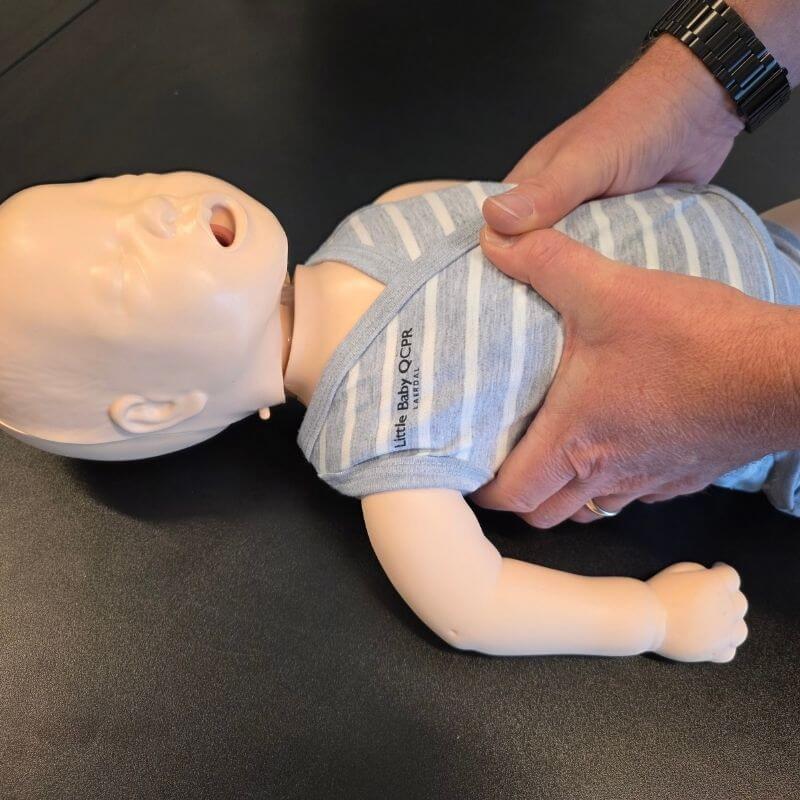
What Are the Current EYFS First Aid Requirements 2026?
Under the EYFS statutory framework:
At least one person with a current full Paediatric First Aid (PFA) certificate must be on the premises at all times when children are present
A Paediatric First Aid qualified person must accompany children on outings
Childminders and assistants left in sole charge must hold a current PFA certificate
Paediatric first aid certificates must remain valid and up to date
These requirements remain a key part of the EYFS safeguarding and welfare standards.
Important changes to the EYFS First Aid Requirements 2026
The updated EYFS framework introduced additional expectations around staffing ratios and safer eating practices within early years settings.
One of the biggest changes is that certain individuals must now hold a valid Paediatric First Aid qualification if they are to count within staffing ratios.
This includes:
Apprentices aged 16+
Students on long-term placements
Volunteers aged 17+
Staff qualified through the Experience-Based Route (EBR)
Previously, this was encouraged but not mandatory in the same way.
For many settings, this means reviewing staffing arrangements and making sure the correct people now hold valid Paediatric First Aid qualifications.
The Difference Between PFA and EPFA
One of the biggest areas of confusion for early years providers is the difference between:
Full Paediatric First Aid (PFA)
and
Emergency Paediatric First Aid (EPFA)
Understanding the difference is extremely important when planning staffing and compliance.
Full Paediatric First Aid (PFA)
The full Paediatric First Aid qualification is typically a 12-hour course and provides broader training covering:
Infant and child CPR
Choking
Anaphylaxis
Bleeding and injuries
Seizures
Medical conditions
Illness management
Emergency situations in childcare settings
This qualification is generally the strongest option for settings that need flexibility and full staffing coverage.
Emergency Paediatric First Aid (EPFA)
Emergency Paediatric First Aid is a shorter course that focuses on emergency situations and basic life-saving skills.
While useful in some circumstances, EPFA alone may not provide the same staffing flexibility as a full PFA qualification.
Importantly:
EPFA does not replace the requirement for full PFA where full qualification holders are required
EPFA alone is not usually suitable for designated EYFS first aid cover
Why Many Settings Are Choosing Full PFA Training
Many nurseries and childcare settings are now choosing to increase the number of staff holding full Paediatric First Aid qualifications. The recent changes to EYFS First Aid Requirements 2026 is something anyone working with children and infants must know and apply.
This is because full PFA training can provide:
- Greater staffing flexibility
- Easier ratio management
- Better meal supervision coverage
- Stronger safeguarding protection
- Increased confidence around emergencies such as choking and anaphylaxis
For many settings, the practical classroom attendance time for blended full PFA is very similar to EPFA, making the full qualification the more practical long-term option.
It is also recommended that anyone working in Early Years settings also complete the 1/2 day Annual First Aid Refresher Training to ensure they are always up to date and competent.
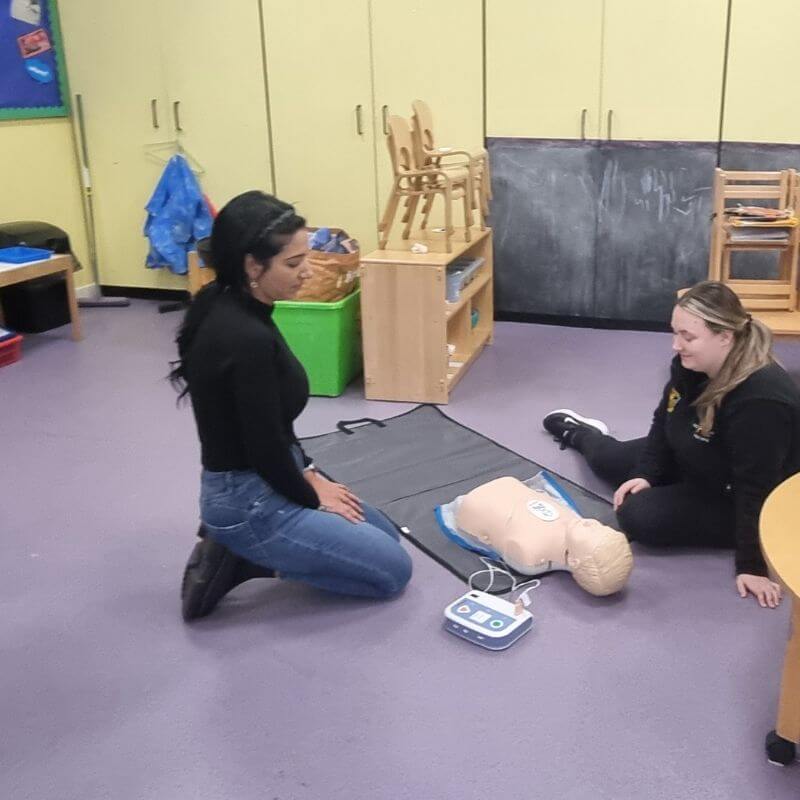
New Safer Eating Expectations in EYFS Settings
One of the most important updates to the EYFS framework relates to safer eating practices within early years environments.
The updated guidance places greater emphasis on:
Choking prevention
Allergy awareness
Appropriate supervision during meals
Staff readiness to respond to emergencies quickly
Recent guidance also highlights that a person with a valid Paediatric First Aid qualification should be present when children are eating.
For many settings, this has reinforced the importance of having sufficient fully trained staff available throughout the day.
Why Choking and Anaphylaxis Training Matters
Choking and severe allergic reactions remain two of the most serious emergency risks within early years settings.
Because of this, practical hands-on training is extremely important.
Staff need to feel confident in:
Recognising choking quickly
Delivering back blows and chest thrusts correctly
Using adrenaline auto-injectors
Responding calmly under pressure
Managing emergency situations until help arrives
This is one of the main reasons practical, regulated Paediatric First Aid training remains so important.
Why Ofqual-Regulated Paediatric First Aid Matters
Choosing Ofqual-regulated Paediatric First Aid training helps demonstrate that your training:
- Meets recognised national standards
- Includes practical assessment
- Is externally quality assured
- Can be evidenced during inspection
This is especially important in EYFS environments where providers may need to demonstrate compliance and training suitability.
Having your Paediatric First Aid Training completed with First Aid and Safety Training will keep you up-to-date with any recent EYFS First Aid Requirements 2026.
Common Mistakes Early Years Settings Make
Some of the most common issues we see where the business does not abide by the EYFS First Aid Requirements 2026 include:
Relying too heavily on EPFA qualifications
Not having enough full PFA holders available
Allowing certificates to expire
Using online-only training without practical assessment
Assuming all first aid courses are equivalent
Not reviewing staffing coverage during meals and outings
These issues are usually unintentional and often happen because providers are trying to navigate increasingly complex guidance.
Our Recommendation for Early Years Settings
Every setting is different, but many nurseries and childcare providers are now moving towards having a larger proportion of staff fully Paediatric First Aid trained.
This often provides:
Better operational flexibility
Improved confidence
Stronger safeguarding support
Simpler staffing management
Better emergency preparedness
Blended Paediatric First Aid is becoming an especially popular option because it reduces time away from the setting while still including the practical assessment and hands-on learning required for compliance.
We’re Happy to Help You Understand the EYFS First Aid Requirements 2026 and What You Need
We understand that the EYFS changes can feel confusing, especially with so many different training options being advertised online.
If you are unsure:
Which qualification your staff need
Whether your current training is suitable
Whether EPFA is enough for your setting
How the safer eating changes affect you
…we are always happy to help guide you.
Our aim is not just to deliver certificates, but to help early years settings feel genuinely confident and properly supported.
Need Advice on EYFS First Aid Requirements 2026?
If you’re unsure whether your training meets the correct standards, or you want to make sure you’re choosing the right course, we’re here to help.
Call Helen on 0191 7166601
Text us on 07853657747
Email admin@firstaidsafetytraining.com
EYFS First Aid Requirements 2026 FAQs
Under the EYFS framework, early years settings must ensure that at least one person with a current full Paediatric First Aid (PFA) certificate is on the premises and available at all times when children are present.
A Paediatric First Aid qualified person must also accompany children on outings.
Full Paediatric First Aid (PFA) is a broader 12-hour qualification covering a wide range of emergency and non-emergency situations involving infants and children.
Emergency Paediatric First Aid (EPFA) is a shorter course focused mainly on life-threatening emergencies and basic emergency response.
For many EYFS settings, full PFA provides greater staffing flexibility and stronger operational coverage.
Not always.
While EPFA can be useful in some circumstances, many settings still require sufficient staff with full PFA qualifications to meet EYFS expectations and staffing requirements.
This is especially important for:
- ratio coverage
- outings
- meal supervision
- operational flexibility
Yes, in many cases.
Recent EYFS updates mean that apprentices aged 16+ who are counted within staffing ratios must now hold a valid Paediatric First Aid qualification.
This has become an important consideration for many early years settings reviewing staffing compliance.
Recent safer eating guidance strongly reinforces the importance of having staff with valid Paediatric First Aid training available when children are eating.
This is due to the risks associated with:
choking
allergic reactions
emergency response delays
Many settings are now reviewing staffing arrangements around meal and snack times as a result.
In most EYFS settings, online-only Paediatric First Aid training is not considered sufficient on its own.
Practical skills such as:
infant CPR
choking response
use of adrenaline auto-injectors
need to be physically demonstrated and assessed.
Blended learning can be compliant when practical classroom assessment is included.
In emergency situations involving children, confidence and practical competence matter enormously.
Staff need to be able to:
recognise emergencies quickly
respond calmly under pressure
physically perform the correct skills
This is why practical hands-on assessment remains such an important part of compliant Paediatric First Aid training.
Ofqual-regulated qualifications are externally quality assured and meet nationally recognised standards.
This means the training:
follows regulated course content
includes proper assessment
is independently monitored
can be evidenced during inspections
This provides greater reassurance for childcare providers, parents and inspectors.
Most Paediatric First Aid certificates remain valid for three years from the date of completion.
Settings should monitor expiry dates carefully to make sure sufficient qualified staff remain available at all times.
Choosing non-regulated or unsuitable training can create problems such as:
insufficient staffing cover
inspection concerns
lack of practical competence
training not meeting EYFS expectations
the need to retrain staff later
Many settings only discover these issues when reviewing staffing ratios or preparing for inspection.
Many nurseries and childcare providers are increasing the number of staff holding full PFA qualifications because it provides:
greater staffing flexibility
simpler ratio management
stronger safeguarding support
improved confidence around choking and anaphylaxis
better operational coverage throughout the day
For many settings, the difference in practical classroom attendance time between blended PFA and EPFA is relatively small, making full PFA the more practical long-term option.
Yes, absolutely.
We regularly help nurseries, schools and childcare providers understand:
- which qualifications are required
- whether EPFA is sufficient
- how staffing ratios are affected
- what the safer eating changes mean in practice
If you are unsure, we are always happy to give honest and practical guidance.
Call Helen on 0191 7166601
Text us on 07853657747
Email admin@firstaidsafetytraining.com