Onsite First Aid Training for a Maritime Team
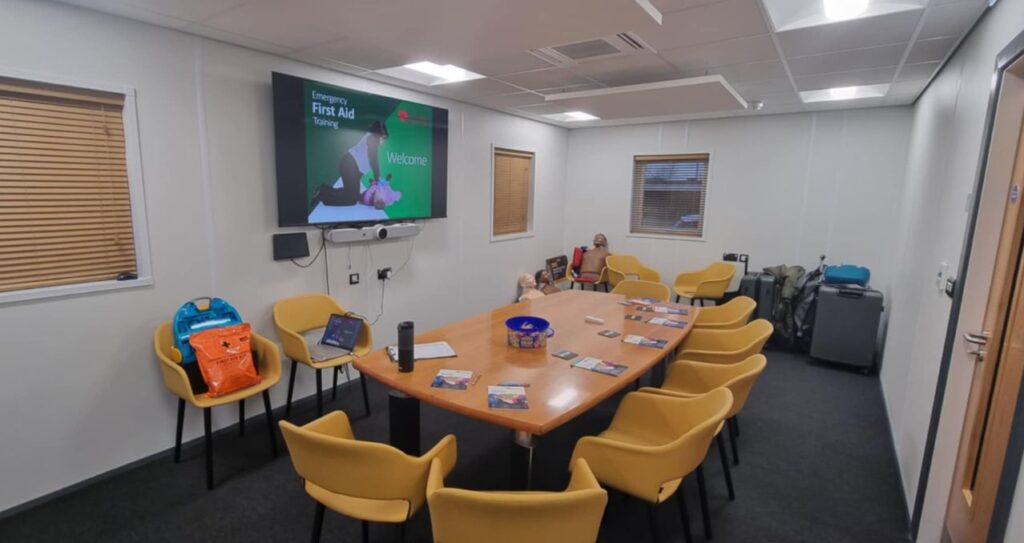
Recently, First Aid and Safety Training delivered an Emergency First Aid at Work course with Catastrophic Bleed training to Svitzer Tees, a major operator of barges on the Rivers Tees and Tyne. The session took place onsite, giving the team the opportunity to focus on scenarios and risks that are specific to their working environment.
A total of 7 learners took part, including barge skippers and crew, supported by administrative staff. The group brought a mix of perspectives and experience, which set the tone for a highly interactive and engaging day.
Tailoring First Aid to the Rivers and Barges Environment
Working on the water presents unique first aid challenges. In addition to the usual workplace first aid considerations, crews must also be prepared for emergencies where:
- access to medical support may be delayed
- movement and space are restricted on board
- rapid response is critical to life-saving outcomes
For these reasons, the course was adapted to include Catastrophic Bleed training, alongside the standard Emergency First Aid at Work content. Catastrophic bleeding scenarios, such as major vessel trauma from heavy equipment or significant lacerations, require different management from minor wounds and rapid intervention can save lives.
As part of the training, the team reviewed the content of their Category C approved medical kit carried onboard. Unlike a typical onshore workplace first aid kit, a Cat C kit is specifically designed for maritime use and approved by the UK Maritime and Coastguard Agency and Lloyd’s Register of Shipping for small commercial and survival craft use. These kits contain not only dressings and wound care supplies, but also relevant medicines such as anti-sickness tablets and analgesics, packed in heavy-duty waterproof containers suitable for harsh marine conditions.
This contrasts with shore-based kits, which focus primarily on basic wound care and minor emergencies. The marine Cat C medical stores prepare crews for a broader range of situations at sea, with considerations for delayed external help and distinct environmental hazards.
Real-Life Incident Reflections
Throughout the day, learners shared real experiences that highlighted why this training mattered:
- A learner described responding to radio traffic about a heart attack casualty on a fishing vessel and the strain of coordinating help with just a three-man crew onboard.
- The group reflected on a tragic incident in North Yorkshire where people were washed into the sea, discussing how first responders and crew might approach a similar rescue situation.
- Personal stories included dealing with serious injuries and diabetic emergencies, emphasising how unpredictable first aid needs can be.
- One crew member recounted performing CPR and using an AED while serving in the Royal Navy, underscoring the importance of confidence and repetition in life-saving skills.
These discussions not only enhanced learning but also reinforced the value of teamwork and shared experience in first aid.
What the Training Covered
The course blended maritime-specific considerations with essential EFAW skills:
- Assessing an incident and prioritising safety
- Unconscious casualty care and casualty management
- CPR and AED use
- Recognition and management of catastrophic bleeding
- Choking emergencies
- Shock and circulation issues
- Basic wound care, fracture and soft tissue injury support
- Communication and coordination during an emergency
Including Catastrophic Bleed training ensured that the team could respond to severe blood loss situations, often seen in trauma or industrial incidents with confidence and clarity.
Feedback from the Day
Learners enjoyed the practical, hands-on nature of the training and the way it related directly to their roles:
“Good course and excellent tutors.” — Michael
“Adam has great training skills and good communication.” — Mark
“Information was easy to understand and enjoyable.” — Andy
“Very good use of the time and friendly trainers, enjoyable day.” — Jodie
“Very good course and informative.” — Anthony
“Brilliant course and well ran.” — Andrew
“Good course for basic first aid.” — Gyles
All learners left feeling better prepared to respond effectively—not just in a medical sense, but as a cohesive team.
Why Onsite Training Makes a Difference
Delivering first aid training onsite for teams like Svitzer Tees allows us to:
- tailor scenarios to specific workplace risks
- incorporate actual equipment and medical kits
- encourage discussion of real life situations
- build team confidence and mutual support
These factors elevate standard first aid training into something that truly matters in practice.
Ready to Book Onsite Training?
If your team works in a specialised environment, whether marine, industrial, construction, education, or community services, onsite first aid training ensures the skills learned are directly relevant and immediately applicable.
Contact us to discuss your needs and book a tailored course that fits your organisation.