Skip to content

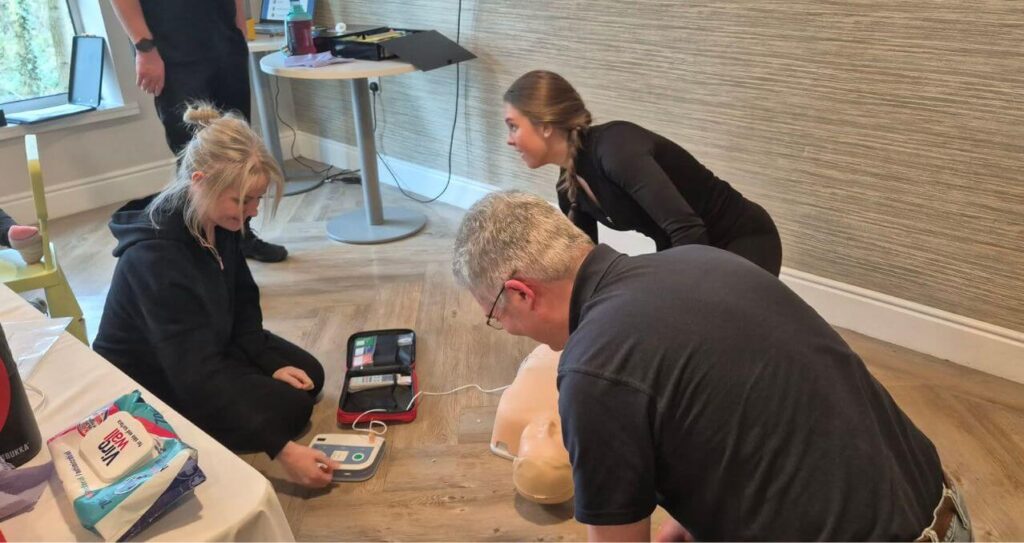
First aid training for sport and fitness professionals works particularly well when the skills can be related directly to the activities, environments and emergencies learners may actually encounter.
That was a major feature of one of our first Level 3 Emergency First Aid at Work (EFAW) courses at our Durham training location, Bannatyne Health Club and Spa Durham.
The course brought together people working across several areas of sport, fitness and physical activity, including:
- an instructor and rider from The Bike Club
- a representative from The Reform Lab
- a self-employed personal trainer
- additional personal trainers working with local sports clubs
From the beginning, learners brought their own experience into the discussions, creating a practical and highly interactive training day.
First Aid Training for Sport and Fitness Environments
A personal trainer working in a gym can face very different situations from a cycling instructor working outdoors.
The core Emergency First Aid at Work skills remain the same, but making the training relevant means considering how those skills might actually be needed.
Throughout the day, we discussed scenarios connected to the learners’ own activities and working environments.
These included:
- a severe femoral artery bleed following a mountain bike accident
- multiple injuries and possible spinal trauma following a fall from an indoor climbing wall
- a personal trainer witnessing a seizure in a gym
- a serious allergic reaction following a skin treatment
These weren’t simply hypothetical subjects added to a presentation.
They gave learners an opportunity to think through what they would do, how they would manage the immediate environment and when they would need emergency medical assistance.
Using Real Experiences to Make First Aid Relevant
One of the strengths of this particular course was the amount of knowledge and experience within the group.
Learners were encouraged to discuss situations they had encountered or could realistically face within their work.
That changes the dynamic of a first aid course.
Instead of asking only, “What is the correct first aid procedure?”, we can explore questions such as:
What would this look like in your gym?
What if the casualty was on a climbing wall?
How would you manage an emergency on a mountain bike trail?
Where is the nearest AED to where you normally work?
Connecting first aid principles to a recognisable environment can help learners understand how they would put those principles into practice.
Practical Emergency First Aid at Work Training
The Emergency First Aid at Work qualification covered the core skills learners may need when responding to a workplace emergency.
Training included:
- assessing an incident safely
- recognising an unresponsive casualty
- adult CPR
- safe use of an Automated External Defibrillator (AED)
- managing an unconscious casualty
- responding to choking
- controlling external bleeding
- recognising and managing shock
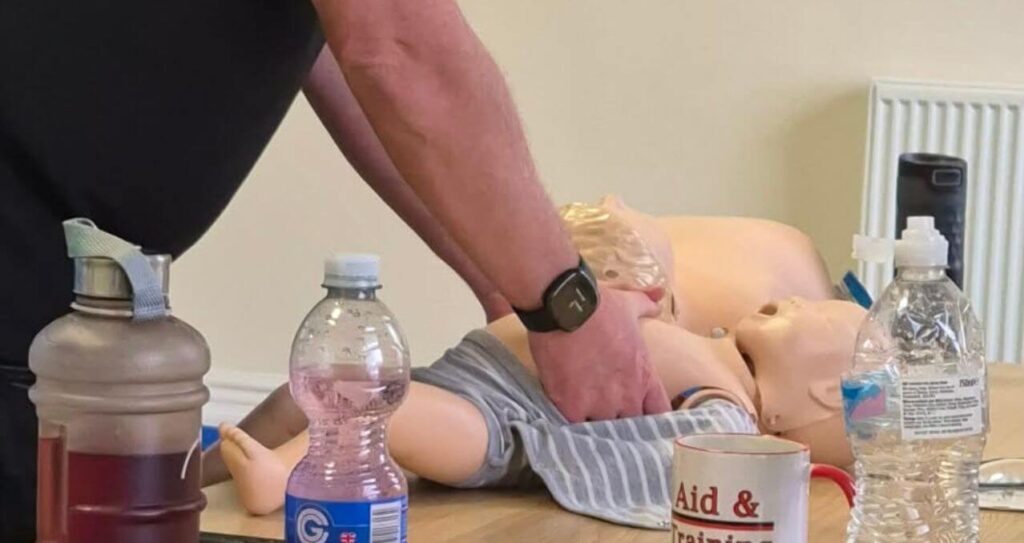
Learners practised the skills themselves and completed the required practical assessments during the course.
You can find out more about the Emergency First Aid at Work qualification and practical skills covered.
Responding to Emergencies in Active Environments
Sport and fitness settings can create some interesting first aid discussions because the environment itself may influence the response.
A casualty on a gym floor presents a very different scene from someone injured outdoors while mountain biking.
Similarly, an incident involving a person who has fallen from height may require very different considerations from someone who suddenly becomes unresponsive during a personal training session.
The learners’ experience allowed us to explore these differences while keeping the core first aid principles clear.
This is where first aid training for sport and fitness becomes particularly valuable: learners can take recognised first aid skills and consider how they apply within their own working environment.
An Interactive Training Day in Durham
We believe people learn practical first aid by getting involved.
Demonstrations were therefore followed by hands-on practice, questions and discussion rather than relying solely on presentation-based teaching.
The atmosphere throughout the day was positive and energetic.
There were serious discussions when needed, but learners were also comfortable enough to ask questions, share experiences and learn from each other.
That balance was reflected in the feedback we received.
What Did the Learners Think?
“Excellent course, thank you so much.” – Tim
“I found the course really helpful and interesting, especially with the discussion around real life incidents.” – Paige
“Great day, enjoyable way to learn these essential topics.” – Alison
“Fun and engaging course, made relevant to working as a personal trainer.” – Sarah
All learners successfully completed the qualification.
The feedback was particularly encouraging because making first aid relevant to the people in the room was one of the main objectives of the day.
First Aid Training for Sport and Fitness Businesses
This Durham course demonstrated how the same Emergency First Aid at Work qualification can be made relevant to people working across cycling, gyms, personal training and other physical activities.
The qualification requirements don’t change, but the discussions, examples and scenarios can reflect the environments in which learners actually work.
If you work in sport or fitness and need an individual qualification, you can view our upcoming first aid courses in Durham.
For gyms, sports clubs and other organisations that need to train a group of staff, we can also provide onsite first aid training across County Durham.
First Aid and Safety Training also delivers workplace training across the wider North East.
If you’re unsure which qualification is appropriate for your staff, contact First Aid and Safety Training to discuss your requirements.
You can also view our Durham training location and reviews on Google.