Skip to content
Onsite first aid training for teams allows employees to learn together in their own working environment, while giving trainers an opportunity to make discussions and examples relevant to the organisation.
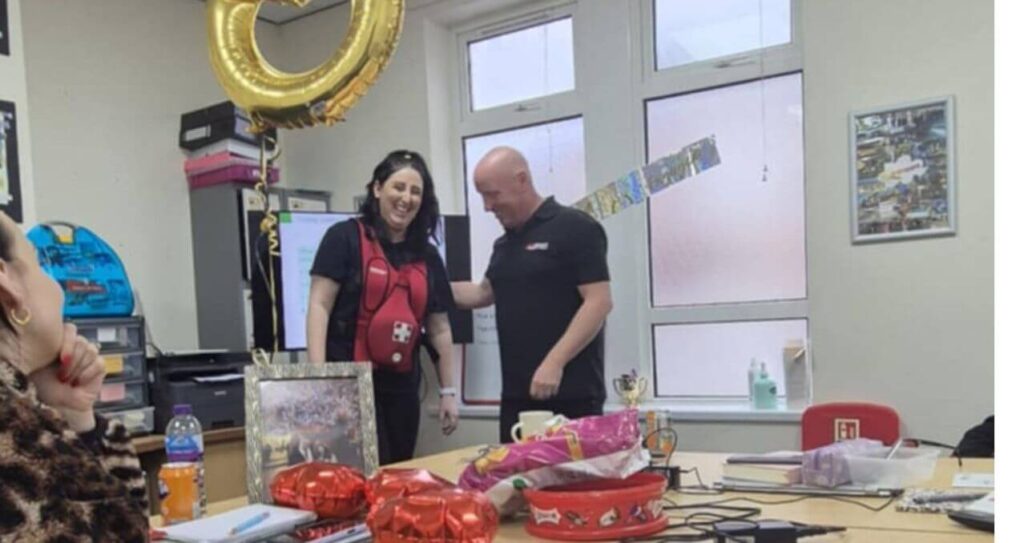
On 6 January 2026, First Aid and Safety Training delivered a Level 3 Emergency First Aid at Work (EFAW) course for Bright Futures North East at the Community Hub on John Williamson Street in South Shields.
Six members of staff took part. All had completed first aid training previously, so this wasn’t their first experience of CPR, AEDs or emergency first aid.
The aim was to refresh those essential skills while creating a training day that staff could actively participate in and enjoy.
Onsite First Aid Training for Teams
One advantage of training employees together is that the course becomes a shared experience.
Rather than sending individuals to different courses on different dates, colleagues can practise together, discuss previous experiences and consider how they might support each other during an emergency.
For the Bright Futures team, delivering the course at their own premises also meant we could make the arrangements work around the group.
We agreed a slightly later start time and maintained an appropriate pace throughout the day, with breaks and opportunities for discussion built into the session.
These might seem like small details, but creating the right learning environment can make a significant difference to how people engage with training.
Moving Away From Tick-Box Training
Several learners had attended first aid training before.
Their previous experiences created useful discussion about how people perceive mandatory workplace training.
Training can quickly become something employees feel they simply have to complete to obtain another certificate.
We wanted this course to feel different.
The qualification still has defined learning outcomes and assessment requirements. A relaxed atmosphere doesn’t mean reducing those standards.
Instead, it means making learners comfortable enough to ask questions, get involved and practise.
That approach worked particularly well with the Bright Futures group.
Refreshing Essential Emergency First Aid Skills
Emergency First Aid at Work concentrates on essential skills that a workplace first aider may need during an emergency.
During the course, the Bright Futures team practised areas including:
- assessing an incident safely
- recognising an unresponsive casualty
- adult CPR
- using an Automated External Defibrillator (AED)
- managing an unconscious casualty
- responding to choking
- controlling external bleeding
- recognising and managing shock
Because learners had previous first aid experience, we could also discuss what they remembered from earlier courses and identify areas where they wanted more practice.
You can find more information about the Emergency First Aid at Work qualification and what learners cover.
Practical and Visual Learning
The Bright Futures team responded particularly well to practical demonstration and visual learning.
A first aid course shouldn’t rely solely on somebody standing at the front of a room talking.
Learners need opportunities to see techniques demonstrated and then perform them themselves.
CPR is a good example.
Someone can understand that chest compressions are required during cardiac arrest without necessarily being able to perform effective CPR.
Using training manikins allows learners to practise the physical technique and receive feedback.
The same principle applies to AED use, choking and other practical first aid skills.
Emergency First Aid at Work Training in South Shields Case Study
Learning Alongside Colleagues
Something else developed as the day progressed.
Members of the team who didn’t normally work closely together had an opportunity to talk, share experiences and learn more about each other’s roles.
That gave the course an unexpected team-development element.
Learners could:
- discuss previous experiences
- ask questions as a group
- practise skills together
- learn how colleagues approached problems
- build confidence around each other
This doesn’t turn an EFAW qualification into a team-building course.
However, bringing colleagues together to learn a practical skill can naturally strengthen communication and relationships within a team.
Making People Comfortable Enough to Learn
One of the clearest themes in the learner feedback was how comfortable people felt during the training.
That matters.
Someone who is worried about looking foolish may avoid asking a question.
Someone who feels under pressure may concentrate more on passing an assessment than understanding what they’re doing.
Creating a friendly environment allows learners to say when they aren’t sure, practise again and ask for clarification.
The subject remains serious, but the process of learning it doesn’t need to be intimidating.
What Did the Bright Futures Team Think?
The feedback from the six learners reflected the atmosphere throughout the day:
“The course covered exactly what I needed to know. The trainer was knowledgeable and engaging, thank you.” – Bronwin
“Excellent training, made fun!” – Dominique
“Great course delivered at a good pace. Enjoyed the use of visual and practical demonstration. Good pace and enough breaks.” – Ellen
“Very likeable and real life stories kept it interesting.” – Toni
“It was very informal but that is the best way to learn. Enjoyed the session and found it easy to understand.” – Lianne
“Great course, trainer very friendly and made us feel comfortable and at ease.” – Bridie
All six learners successfully completed the Emergency First Aid at Work qualification.
Why Train Employees Together?
The Bright Futures course demonstrates several advantages of onsite first aid training for teams.
For organisations with enough employees requiring the same qualification, bringing the trainer to the workplace can:
- reduce staff travel
- allow colleagues to train together
- make scheduling easier
- provide opportunities to discuss the organisation’s working environment
- allow previous workplace experiences to inform discussion
- create a shared understanding of emergency first aid
It can also be particularly useful when an organisation wants several employees trained at the same time rather than sending them individually to different open courses.
Choosing the Appropriate Workplace First Aid Course
EFAW isn’t automatically the correct qualification for every organisation.
Employers should determine their first aid provision through a suitable first aid needs assessment.
The appropriate level of training can depend on factors including workplace hazards, employee numbers, working patterns, accident history and how easily emergency medical assistance can be accessed.
Our guide to the legal requirements for first aid at work explains this in more detail.
Onsite First Aid Training in South Shields and the North East
First Aid and Safety Training provides onsite first aid training in South Shields and throughout the wider North East.
Training can include Emergency First Aid at Work, the more comprehensive First Aid at Work qualification and other first aid courses depending on your organisation’s requirements.
If you only need one or two people trained, our open first aid courses in South Shields may be more appropriate.
If you’re considering onsite first aid training for teams, contact First Aid and Safety Training to discuss your staff numbers, workplace and training requirements.
You can also view our South Shields location and customer reviews on Google.