Skip to content
Workplace first aid training can do more than develop the skills of individual first aiders. When employees from different parts of an organisation train together, it can also help them understand each other’s roles, discuss the risks they face and consider how they would respond together during an emergency.
That became an important part of a Level 3 First Aid at Work (FAW) course delivered by First Aid and Safety Training for Groundwork South and North Tyneside in January 2026.
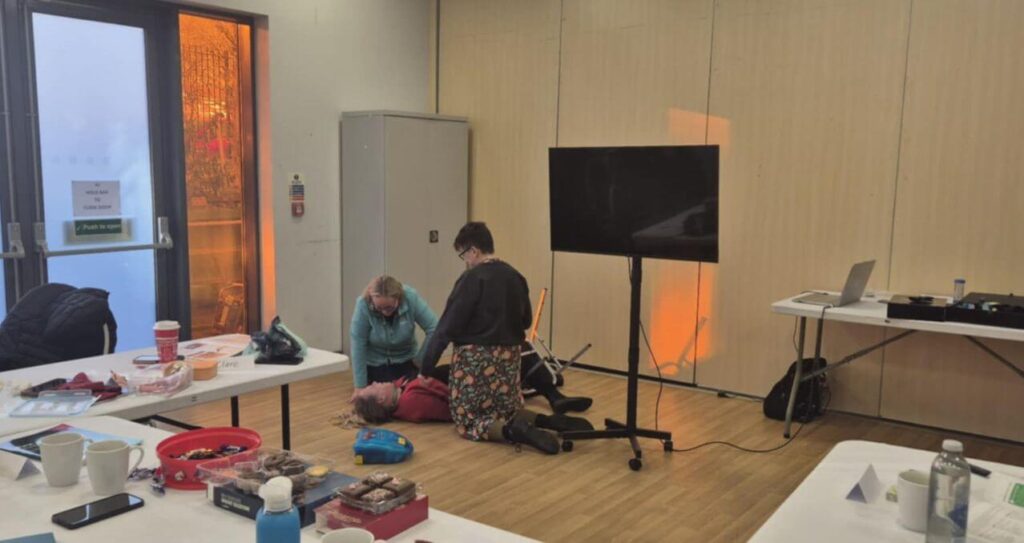
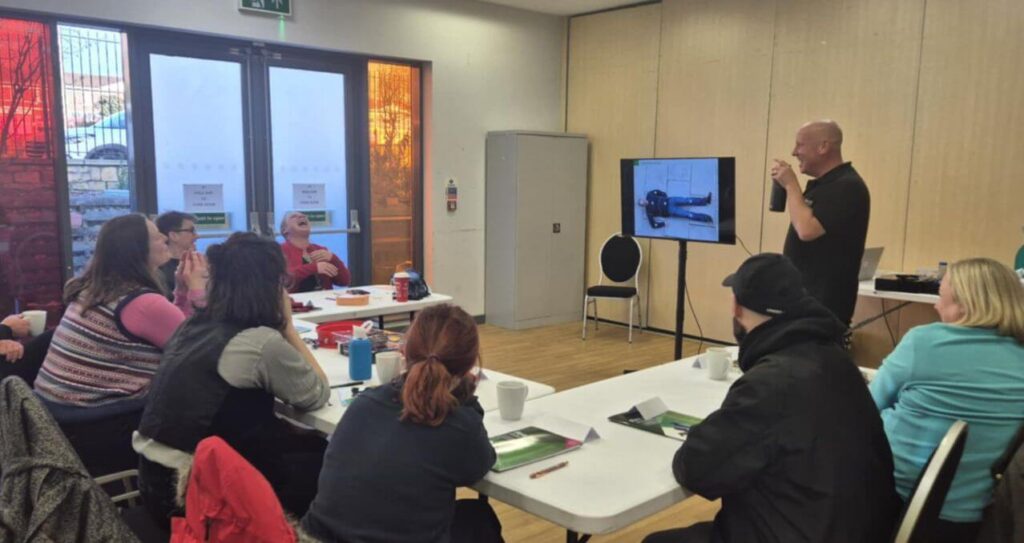
Eight Groundwork employees completed the blended qualification, with the practical training taking place on 5 and 7 January at Marsden Road Community Centre in South Shields.
The group included supervisors, lone workers, archaeology staff, outdoor and green experience leaders, front-of-house employees and management.
That mixture of roles created one of the most interesting aspects of the course.
Workplace First Aid Training Across Different Roles
Groundwork’s employees don’t all spend their working day in the same environment.
Some work outdoors. Others may work alone, interact with members of the public or have supervisory and management responsibilities.
That means the situations they encounter can also be very different.
Bringing employees together for workplace first aid training gave the group an opportunity to look beyond their individual roles and consider the wider organisation.
Staff discussed the environments their colleagues worked in, previous incidents and the types of emergencies that could potentially occur.
This helped make the training relevant without changing the requirements of the First Aid at Work qualification.
A Blended First Aid at Work Course
Groundwork completed the qualification using a blended learning format.
Learners completed appropriate theory before attending the face-to-face sessions, allowing the practical training to concentrate heavily on developing and assessing first aid skills.
During the practical sessions, learners worked on areas including:
- adult CPR
- using an Automated External Defibrillator (AED)
- managing an unconscious casualty
- responding to choking
- controlling bleeding
- recognising and managing shock
- managing injuries
The wider First Aid at Work qualification also develops knowledge of medical emergencies and injuries that go beyond the Emergency First Aid at Work syllabus.
For organisations whose first aid needs assessment identifies the need for broader training, the full FAW qualification can therefore be more appropriate than the one-day EFAW course.
Real Experiences Made the Training Relevant
As discussions developed, it became clear that the group already had considerable experience of illness and injury between them.
Learners discussed situations involving:
- Type 1 diabetes
- serious burn injuries
- an incident requiring assistance from the Air Ambulance
- emergencies encountered through work and everyday life
These conversations weren’t included to make the training more dramatic.
They demonstrated that first aid isn’t an abstract subject.
People in the room had already encountered situations where somebody needed help, and those experiences allowed the group to discuss how first aid principles apply outside a textbook or presentation.
Turning Theory into Practical Skills
One learner later described the practical sessions as helping to “put the online theory into context.”
That is one of the main purposes of the face-to-face element of blended training.
Understanding what CPR involves is different from physically performing chest compressions.
Reading about an AED is different from attaching training pads and responding to the device’s prompts.
Similarly, understanding the theory behind bleeding, unconsciousness or injury management needs to be connected with practical decision-making.
Learners were therefore given opportunities to practise, receive feedback and repeat techniques throughout the course.
First Aid Training Became Team Development
An additional benefit became apparent as the course progressed.
Some of the Groundwork employees didn’t normally work closely together.
Training as one group gave them an opportunity to learn more about each other’s roles, working environments and experiences.
For example, an employee primarily based in one environment could hear about the practical challenges faced by colleagues working outdoors or alone.
Those conversations encouraged learners to think about first aid as an organisational issue rather than solely the responsibility of the person whose name appears on a first aider list.
Designated first aiders need the appropriate training, but a well-prepared workplace also benefits from employees understanding how they can support an emergency response.
That might mean raising the alarm, contacting the emergency services, retrieving an AED or first aid equipment, directing an ambulance crew or helping manage the surrounding area.
Considering Lone and Outdoor Workers
The range of Groundwork roles also created useful discussion around people who may not always work in a conventional office environment.
For employees working alone or outdoors, an organisation’s first aid needs assessment may need to consider issues such as:
- where employees are working
- how quickly help can reach them
- how they can summon assistance
- what first aid equipment is available
- whether employees travel between different locations
- the particular hazards associated with their work
Training alone doesn’t answer all of those questions.
However, workplace first aid training can provide a useful opportunity for employees and managers to identify issues that may need to be considered within the organisation’s wider first aid arrangements.
What Did the Groundwork Team Think?
Learner feedback strongly supported the combination of practical learning and a relaxed training environment.
“It was fun and enjoyable. It was made fun which I think makes the learning side more enjoyable.” – John
“Informative, relaxed setting and great experience.” – Clare
“Super fun and informative – put the online theory into context, overall paced well.” – Lucy
“Adam and Helen were both great! Kept the course engaging and well-paced and I think we all learned a lot.” – Ellie
“Great course, knowledgeable and friendly trainers. Would highly recommend.” – Kate
All eight learners successfully completed the required theory and practical assessments.
Choosing Between EFAW and First Aid at Work
Not every workplace requires the same level of first aid provision.
Employers should determine their requirements through an appropriate first aid needs assessment, taking account of factors such as workforce size, workplace hazards, working patterns and access to emergency medical services.
For some organisations, Emergency First Aid at Work may provide an appropriate level of training.
Others may identify a need for the broader First Aid at Work qualification.
We’ve explained this further in our guide to the legal requirements for workplace first aid.
Onsite First Aid at Work Training for Teams
The Groundwork course demonstrates one of the advantages of training employees together.
The qualification provides the required framework, while discussions can reflect the organisation’s actual roles, previous incidents and working environments.
That can make training particularly valuable for organisations with staff spread across different departments, sites or types of work.
First Aid and Safety Training provides onsite first aid training across the North East, including Emergency First Aid at Work and the more comprehensive First Aid at Work qualification.
Individuals can also view our open first aid courses in South Shields.
If you’re unsure whether your organisation requires EFAW, FAW or another form of training, contact First Aid and Safety Training to discuss your first aid needs.
You can also view our South Shields training location and customer reviews on Google.